


Fold-e Belt folding electric bicycle
Urban folding electric bicycle, light and compact
 We deliver it to you in 24 or 72 hours.
Made in Europe

Direct from the factory

Lifetime frame warranty
Main features
Aluminium frame
Bafang H700 motor – automatic 2-speed 250W 50Nm
Lithium battery 36V 9Ah (324Wh)
Fully integrated and removable battery in the seatpost
Automatic 2-speed transmission
Belt drive
Torque sensor
5 assistance levels
Walk Assistance – Allows the bike to move forward on its own at low speed (4–5 km/h) while you walk alongside it
Hydraulic disc brakes (front 160mm / rear 160mm)
Latest-generation colour display showing:
- Battery level
- Assistance level
- Current, average and maximum speed
- Trip and total distance
Adjustable aluminium stem
Aluminium fork
22" wheels
Double-wall aluminium rims
Kenda tyres 20x1.95
Aluminium seatpost with integrated battery + anti-theft lock
Non-slip foldable pedals
Ergonomic grips
Bell
Rear rack
Kickstand
Mudguards
Front and rear LED lights
Maximum recommended weight 110kg
Range of up to 60 km in eco mode
Image gallery


Bafang H700 Dual Speed automatic motor
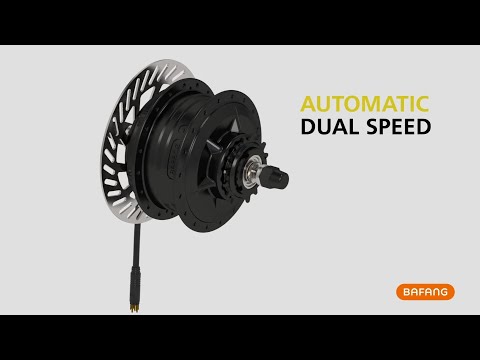
The Fold-e BELT is a bicycle with a BAFANG H700 2-SPEED automatic gearbox and belt drive motor, offering a simple and comfortable riding experience.
How does it work?
- Effort and speed detection – The system detects your pedalling effort, your speed and the type of terrain.
- Calculation of the ideal gear ratio – The algorithms analyse this data to determine the most suitable gear ratio and maintain your desired pedalling cadence.
- Automatic gear shifting – The bike shifts gears automatically, whether speeding up or slowing down, providing optimal and smooth assistance.
Main advantages
- Comfort and simplicity – No more thinking about changing gears.
- Efficiency – You always maintain the right gear ratio.
- Natural riding experience – Smooth and jerk-free shifting.
More about range
The battery of an electric bike is a kind of energy reservoir for the assistance system. The battery range is entirely linked to the bike and depends on many parameters and factors that have a direct influence. It can vary by one to three times (or even more) depending on:
A) Topography (flat, moderate relief, high relief) – Route type- Urban: with many stops and starts that consume energy
- In the countryside: mostly smooth and linear
- On mountain trails with climbs where the electric assistance will put the battery under sustained strain, on routes where the total elevation gain can be very significant
- Example: a 25 kg Dutch-style bike with a very upright riding position offering significant air resistance will automatically consume more energy for a person weighing 90 kg than for one weighing 70 kg.
- Rubber compound, structure, size – but above all optimal tyre inflation! Using an electric bike with under-inflated tyres can result in a range loss of up to 30%.
- In cold weather, a battery naturally loses range. The optimal temperature is between 15 and 25°C.
- If the rider is using eco mode, they will of course be able to cover a greater distance than in turbo mode.
Integrating the battery into the frame gives it additional rigidity and better weight distribution, making the bike more dynamic. The battery is also better protected in the event of an impact.
48V 13Ah battery (624Wh) = 120km* – Person weighing 70/75kg in eco mode.
36V 16Ah battery (576Wh) = 80km* – Person weighing 70/75kg in eco mode.
36V 10Ah battery (360Wh) = 70km* – Person weighing 70/75kg in eco mode.
How many kilometres can I cover with my electric bike? This is the big question we ask ourselves when we want to buy an electric bike, and the answer is complex, as it depends on many factors.The first and main factor regarding the range of a fully charged battery is the energy stored in it, which we quantify in watt-hours (Wh) and obtain by multiplying the battery voltage (V) by the amp-hours (Ah). For example, a 48V 13Ah battery has a full-charge energy of 624Wh, and a 36V 16Ah battery has an energy of 576Wh.
Once the concept of energy is clear, we need to look at the motor power, which determines how that energy is consumed. A bicycle for legal use in the EU may have a motor with a maximum rated power of 250W, but it does not consume the same amount when working at its limit on a climb of more than 20% (with peak consumption of close to 150% of its rated power) as when used calmly on flat terrain.
Once this is understood, we can also say that it makes no difference if the rider climbing a 20% gradient does so on a low assistance level and provides most of the effort themselves through pedalling, while the rider on flat ground uses a high assistance level and makes no effort, leaving all the work to the motor. To this factor, which is obviously key to range, we can add other factors that have a lesser influence, such as the rider's weight, their position, their pedalling cadence, and how frequently they stop and start, since acceleration creates consumption peaks.
The type of terrain (hilly or flat), the surface (tarmac or road), and even the wind (headwind), as well as tyre type and geometry, also have an effect.
For all these reasons, it is very difficult to provide precise and reliable information about the bike's range. The range information we provide for our products is based on a person weighing 75kg with normal use of the bike – that is, for mountain bikes with combined use on trails with climbs and descents, for urban bikes with city commuting involving frequent stop-start cycles, and so on.
We do not advertise maximum range figures, but real-world values from tests carried out without specifically targeting low consumption. We have achieved ranges of over 200km by seeking maximum efficiency, but we feel it would be dishonest to advertise these figures, as the use of resources was not representative of normal use.
We can only add that the feature that sets MOMA electric bikes apart from the competition is precisely their range. 100% of professionals who have tested them have been impressed by this figure. For us, it is the essential feature of this type of vehicle, and we work day by day to improve it as much as possible, with high-capacity energy storage batteries and highly efficient motors that consume as little energy as possible.

Unboxing Moma Fold-e Belt
Geometry

Product details
| Attribute | Value |
|---|---|
| Brand | Moma Bikes |
| Product type | ebikes |
| Collections | Electric Bikes, Electric Folding Bikes, All products, 20-inch bicycles |
| SKU | BIFOLDEBELT |
| GTIN / EAN | 8436578264308 |
| Availability | In stock |
| Price | 1299.99 EUR |
| Size | one size (1.55 - 1.95 m) |
| Available options | Size: one size (1.55 - 1.95 m) |
Frequently bought together


